

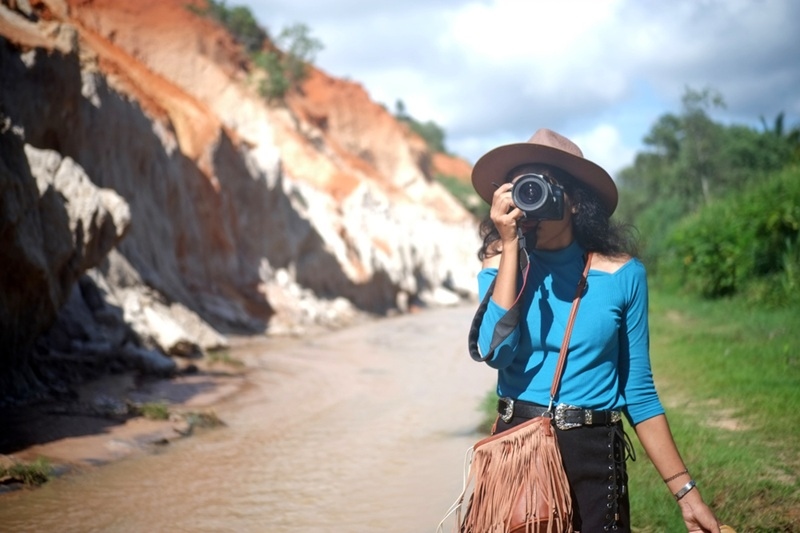
Photography involves much more than just capturing memories; it is also a sophisticated medium for communicating visually. Photographers enhance their skills by understanding the different varieties of photography and by defining their own unique photographic style, turning snapshots into works of art that are easily identifiable. For both experienced and new photographers, understanding the difference between style and genre is crucial to developing creativity.
The purpose of this guide is to discuss the primary categories of photography, discuss how styles develop, and provide information to help photographers confidently and intentionally develop their own unique photographic styles.
Photographic types are established groups of photographs classified by subject, purpose, or use. This will help photographers become experts in one or more areas and also give viewers a better understanding of the image's purpose.
Portrait photography focuses on people and their feelings and personalities. It can range from a portrait headshot in a photography studio to an environmental portrait in which a photographer tells a deeper story about a person through their environment.
The purpose of this photographic type is to capture nature (natural geographic) and outdoor scenes. The U.S. National Park Service uses landscape photography to document the preservation of natural and cultural resources through visual stories.
Documenting people interacting in public places through street photography has long been considered an important form of cultural heritage. The Library of Congress has recognized street photography as a historical document of everyday life in America.
Wildlife photography involves ethical considerations and challenges due to the nature of the subject matter. The U.S. Fish & Wildlife Service has developed standards for ethical and responsible wildlife photography practices to ensure that both the photographer and the subject are treated fairly and safely while still documenting the subject's natural environment.
Photography is used for all types of advertisements, branding, and e-commerce. Product photography is both creative and part of a marketing strategy. The U.S. Small Business Administration has repeatedly noted that consumers trust brands more when they use visual branding.
Thought You’d Find This Useful: What is Macro Photography & Tips to Capture Detailed Photos
Photographers often confuse a photographic genre with a photographic style, but the two are distinct and closely related. In this manner:
Genres are organized classifications of photography: portrait, fashion, documentary, architecture, food, etc. They provide a series of guidelines to help you with the technical execution of the genre and to express an audience's expectations for how the photograph should be executed.
A photography style is your visual signature. It will encompass how you light your images, your choice of colour, your composition, mood, and the perspective from which you photograph. If two photographers shoot the same photo in the same genre, both will likely produce vastly different images.
The Smithsonian Institution routinely reinforces that style - not subject - will provide an aesthetic of artistry differentiation in their photography exhibitions.
Establishing your own unique photography style can be accomplished through experience, introspection, and outside influences.
Use the work of photographers you admire as a source of inspiration. Look for recurring elements in their photographs, such as lighting softness, composition preferences, and the overall tone of the image. Use these elements as sources of inspiration but not as restrictions on your own work.
Trying out many different types of photography will help you discover which style is most true to you. As you repeatedly try out different types of photography, the choices that become habitual will help establish your personal style.
Make an effort to ‘curate’ your own body of work regularly. You will begin to see recurring elements in your photographs, including the most commonly used colors, types of composition, and types of subjects, which will help you identify your developing photography style.
According to arts education guidelines established by the National Endowment for the Arts, consistent practice and the evaluation of your own art are necessary for you to grow as an artist.
Here’s Something Helpful: Landmark Photography Tips for Pittsburgh for Amazing Clicks
A world filled with images makes style a key to both credibility and recognition. When seeking out photographers, clients, galleries, and publications will support a photographer's business based on their perspective and not just because they produce great photos.
Identifying a photography style vs. genre allows photographers to clearly communicate how they market themselves, refine their portfolios, and differentiate themselves across disparate platforms without diluting their creativity.
Having guidance on the different photographic techniques establishes a framework for your projects, while finding your photographic style develops your artistic identity. Utilizing the photography style vs. genre concept and consistently experimenting to determine your photographic style will make your work not only intentional but also elevated and inimitable.
There is much more to photography than seeing; it is also about being seen.
A photography genre is defined by the subject matter, whereas a photography style encompasses the creative decisions that determine how a photograph is created. This includes factors such as the lighting used, the atmosphere created, the composition, and the editing methods, all of which will help others recognize an individual photographer's work.
Photographers often take months or even years to develop their own unique photography style; this usually happens through consistent use of camera equipment, experimentation with different shooting methods, and close evaluation of the patterns that emerge across their body of work.
Most photographers have multiple photography styles; this is particularly true when they work across multiple genres. However, good photographers generally produce a consistent body of work with a recognizable visual identity for each type of photography they do.
Photography style develops over time through the experiences of photographing, experimentation with different styles, and critiquing one's own work and how it influences one's individual photography voice. Photographers learn about their photography style through experience and using a diverse range of photography methods to figure out what resonates with their own creativity.
Photography equipment will have a much larger impact on photography genres than photography styles. Even though photographers use specific tools for different types of photography, the decisions they make to produce their work, as well as the style, storytelling method, and artistic vision, will all influence how an individual photographer develops their style.
This content was created by AI